
Trigger Points by Body Region
Explore trigger points and symptoms by anatomical region: head, neck, shoulder, back, hip, leg, foot.
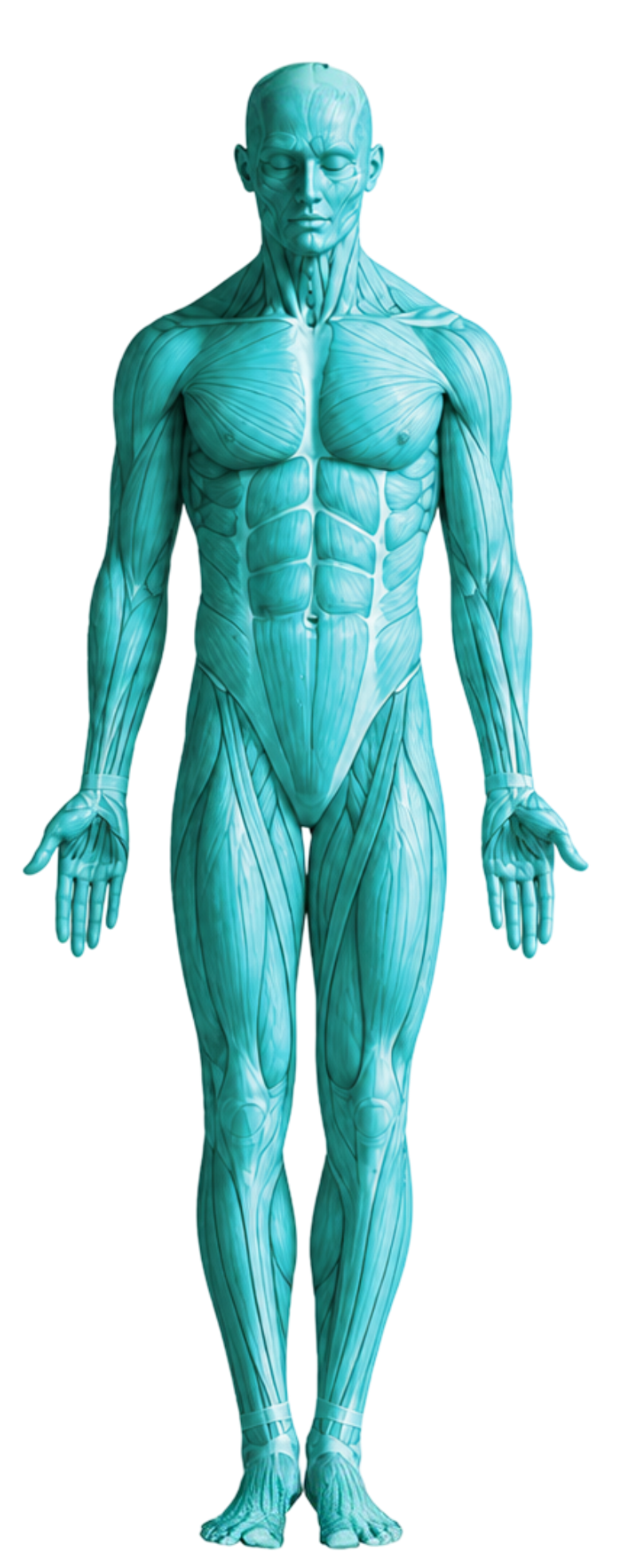
The body-region index brings together muscles and symptoms within seven anatomical areas. Open a region to compare its overview diagram with the individual referral maps.
Trigger points are tender spots within taut bands of skeletal muscle. Pressure can produce local discomfort or referred pain in a different area. An active trigger point reproduces a familiar complaint; a latent one is tender without the same spontaneous symptom. “Muscle knots” is the everyday expression, but a painful spot alone does not establish a diagnosis.
Referred pain explains why the place that hurts is not always the muscle being assessed. Different muscles can have overlapping patterns, and similar symptoms can also arise from joints, nerves or other conditions. The maps here describe associations from the reference set, not a guarantee that a particular muscle is responsible for an individual problem.
Compare the exact location of your complaint with the available maps, then read the linked muscle and symptom descriptions together. Primary, secondary and tertiary labels preserve the reference ordering. They do not replace examination or rule out other causes. The introductory guides explain the terminology and distinctions; muscle pages provide existing palpation landmarks, loading factors, self-care precautions and source references. Seek professional assessment for persistent, unexplained or worsening symptoms.
Head and Neck — trigger points
Headaches, jaw pain, facial pain and neck pain that most often refer from cervical, masticatory and upper shoulder muscles.
Upper Back, Shoulder and Arm — trigger points
Interscapular pain, shoulder pain and arm pain that commonly refer from rotator cuff, scapular stabilizers and the deltoid.
Torso — trigger points
Chest, mid-back and thoracic pain often referring from pectorals, intercostals, serratus and thoracic paraspinals.
Lower Torso — trigger points
Low back, abdominal and pelvic pain that commonly refer from quadratus lumborum, abdominal wall and pelvic floor muscles.
Hip, Thigh and Knee — trigger points
Hip, groin, thigh and knee pain that commonly refer from gluteals, piriformis, quadriceps, hamstrings and adductors.
Leg, Ankle and Foot — trigger points
Calf, shin, ankle and foot pain that commonly refer from gastrocnemius, soleus, peroneals and intrinsic foot muscles.
Forearm and Hand — trigger points
Elbow, forearm, wrist and hand pain that commonly refer from forearm flexors and extensors and the intrinsic hand muscles.