
Torso
Chest, mid-back and thoracic pain often referring from pectorals, intercostals, serratus and thoracic paraspinals.
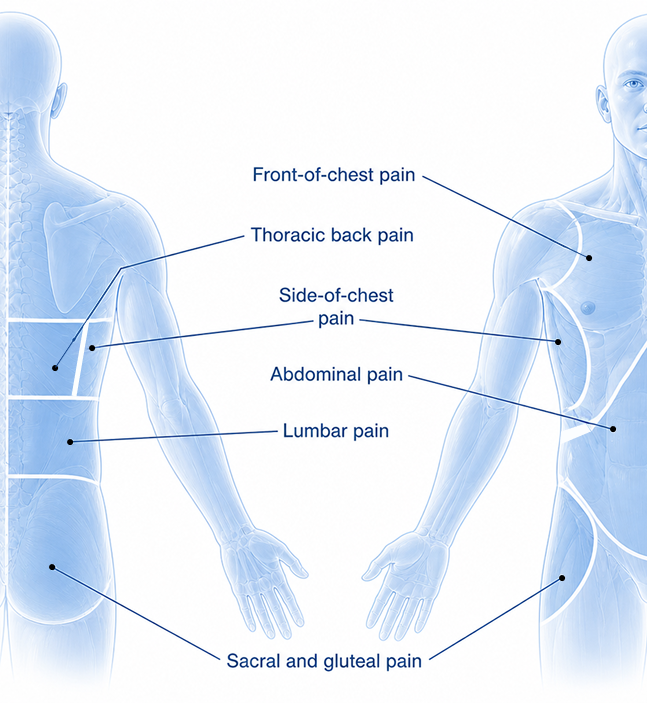
The chest, abdominal and mid-back muscles can produce pain that imitates heart, lung or digestive problems. Pectoral, intercostal, serratus and abdominal trigger points are well documented, but chest and abdominal pain always needs medical assessment first to rule out organ causes before a muscular explanation is accepted.
This Torso page lists 18 symptom patterns and 13 muscles. Start with the symptom that matches where you feel pain: each symptom page shows which muscles are the primary, secondary and tertiary sources. Then open a muscle page to see where its trigger points sit, how to locate them by palpation, common causes and evidence-based self-care.
Referred pain maps describe typical patterns, so use them as a starting point rather than a diagnosis. Trigger points often develop in groups: when one muscle in this region is overloaded, its neighbours usually compensate, which is why the symptom pages list several muscles. If pain is severe, constant, follows an injury or comes with numbness, weakness, fever or night pain, see a clinician before trying self-treatment.
Symptoms
- Abdominal Pain
- Appendicitis-like Pains
- Bloating/Nausea/Abdominal cramps
- Diarrhea
- Dry Cough
- Front of Chest Pain
- Hypersensitive Nipples/Breast Pain
- Irritable Bowel
- Lax, Pendulus Abdomen
- Low Back Pain
- Menstrual Problems, Pelvic Pain
- Nausea & Vomiting
- Rapid/Fluttery/Irregular Heartbeat/Heart Attack-like Pain
- Reflux Esophagitis
- Shortness of Breath/Stitch-in-the-side
- Side of Chest Pain
- Thoracic Back Pain
- Urinary Frequency, Urine Retention, "Kidney" Pain