
Clinical reference
Understand trigger points and referred pain.
Search by symptom or muscle. Clear, source-cited maps of where pain comes from and which muscles are involved.
Explore by body region
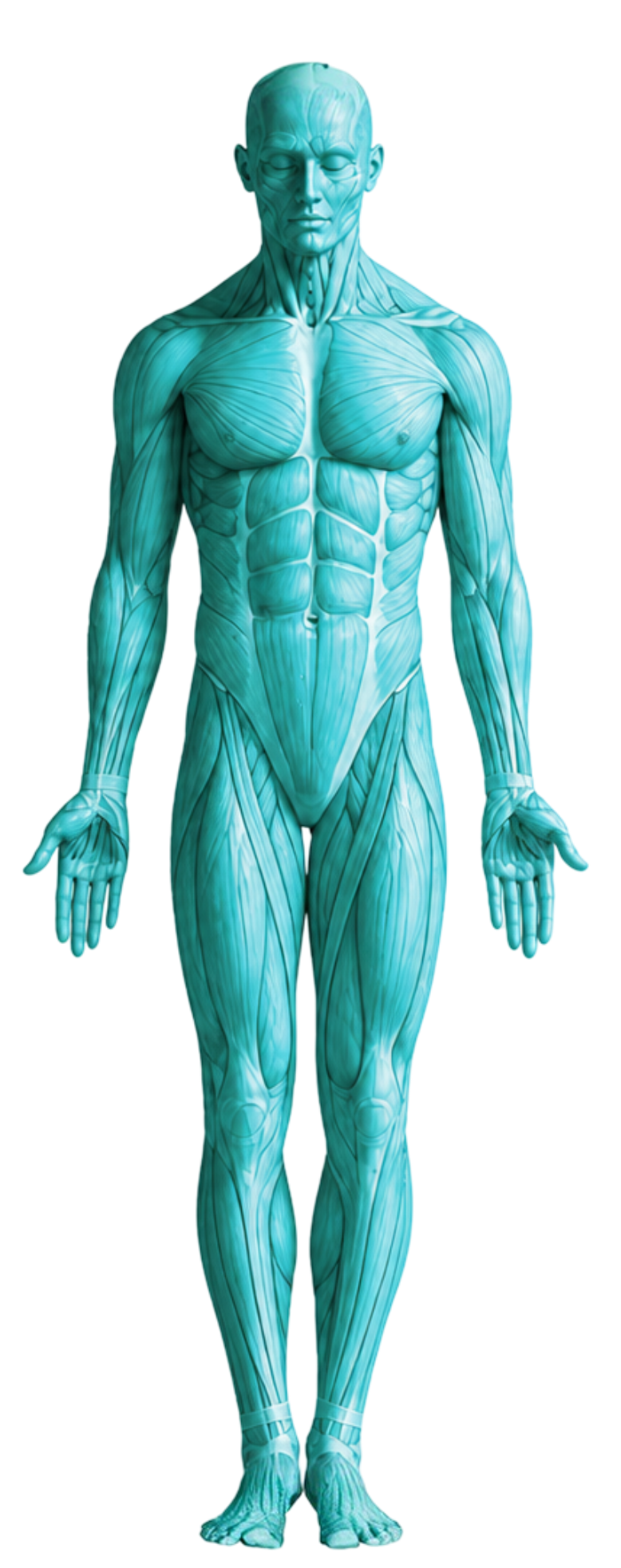
Head and Neck
Headaches, jaw pain, facial pain and neck pain that most often refer from cervical, masticatory and upper shoulder muscles.
Upper Back, Shoulder and Arm
Interscapular pain, shoulder pain and arm pain that commonly refer from rotator cuff, scapular stabilizers and the deltoid.
Torso
Chest, mid-back and thoracic pain often referring from pectorals, intercostals, serratus and thoracic paraspinals.
Lower Torso
Low back, abdominal and pelvic pain that commonly refer from quadratus lumborum, abdominal wall and pelvic floor muscles.
Hip, Thigh and Knee
Hip, groin, thigh and knee pain that commonly refer from gluteals, piriformis, quadriceps, hamstrings and adductors.
Leg, Ankle and Foot
Calf, shin, ankle and foot pain that commonly refer from gastrocnemius, soleus, peroneals and intrinsic foot muscles.
Forearm and Hand
Elbow, forearm, wrist and hand pain that commonly refer from forearm flexors and extensors and the intrinsic hand muscles.
Common symptoms
See all →Low Back Pain
Low Back Pain: trigger points and referred pain. Primary muscles in this reference: Quadratus Lumborum, Longissimus Thoracis, Iliocostalis Lumborum, Iliocostalis Thoracis, Multifidi, Rectus Abdominis.
Back of Neck Pain
Back of Neck Pain: trigger points and referred pain. Primary muscles in this reference: Trapezius, Multifidi.
Headaches or Migraines
Headaches or Migraines: trigger points and referred pain. Primary muscles in this reference: Trapezius, Sternocleidomastoid, Temporalis, Splenius Capitis, Splenius Cervicis, Suboccipital Group, Semispinalis Capitis, Frontalis, Zygomaticus, Orbicularis Oculi, Platysma.
Sciatica
Sciatica: trigger points and referred pain. Primary muscles in this reference: Gluteus Minimus, Semitendinosus, Biceps Femoris, Piriformis, Gluteus Maximus.
Front of Shoulder Pain
Front of Shoulder Pain: trigger points and referred pain. Primary muscles in this reference: Infraspinatus, Deltoid, Scalene, Supraspinatus, Pectoralis Major, Pectoralis Minor, Biceps Brachii, Coracobrachialis.
Anterior Knee Pain
Anterior Knee Pain: trigger points and referred pain. Primary muscles in this reference: Rectus Femoris, Vastus Medialis, Adductor Longus and Brevis.
Heel Pain
Heel Pain: trigger points and referred pain. Primary muscles in this reference: Soleus, Quadratus Plantae, Abductor Hallucis.
Temporomandibular Joint Disorders (TMJ)
Temporomandibular Joint Disorders (TMJ): trigger points and referred pain. Primary muscles in this reference: Masseter, Trapezius, Lateral Pterygoid, Medial Pterygoid.
Frequently involved muscles
See all →Trapezius
The upper fibers of the trapezius are one of the most common sources of tension headaches, neck stiffness and referred temple pain.
Quadratus Lumborum
One of the most common muscular sources of low back pain — deep, hard-to-localize pain that worsens with standing.
Piriformis
A common mimic of true sciatica — buttock pain radiating down the leg, sometimes with neural symptoms.
Gluteus Medius
A leading cause of lateral hip pain and 'low back' pain that doesn't respond to spinal treatment.
Sternocleidomastoid
The SCM refers pain to the forehead, eye, cheek and ear — a frequent and overlooked source of facial pain, headache and dizziness.
Levator Scapulae
Classic cause of the 'stiff neck' that won't rotate — sharp pain at the angle of the neck and shoulder.
Infraspinatus
The most common rotator cuff source of deep anterior shoulder pain — pain felt at the front but coming from the back of the scapula.
Gastrocnemius
A common source of calf cramps and pain behind the knee, and of aching in the instep of the foot.
Soleus
A frequent hidden cause of heel pain, and sometimes of pain referred up to the sacroiliac area.
Scalene
Three deep neck muscles that refer pain into the chest, upper back, shoulder and down the arm — frequent mimics of cervical radiculopathy.
Rhomboid
Retracts and downwardly rotates the scapula.
Supraspinatus
Source of deep shoulder pain that intensifies with abduction — often misread as pure rotator cuff tendinopathy.
Subscapularis
Largest rotator cuff muscle; powerful internal rotator and anterior glenohumeral stabilizer.
Pectoralis Major
Adducts, flexes and internally rotates the shoulder.
Masseter
Primary cause of jaw pain, ear pain and bruxism-related headache — the strongest muscle of mastication per gram.
Temporalis
Fan-shaped jaw elevator over the temporal bone; closes and retracts the mandible.
Iliopsoas
Primary hip flexor; psoas major also influences lumbar lordosis.
Gluteus Minimus
Hip abductor and stabilizer; deepest of the gluteal group.
Multifidi
Deep spinal stabilizer at every segmental level; key for low back resilience.
Suboccipital Group
Four small muscles between the occiput and upper cervical spine; fine-tune head position and proprioception.
Trigger Point Treatment Protocol: Release, Stretch, Needling →
Evidence-based trigger point treatment protocol: manual release dosage, stretch and movement, clinician-only dry needling, regional precautions and sources.
Latest articles
See all →Your MRI is not a diagnosis: what scans show in people without pain
Disc bulges and degeneration show up on scans of people with no pain. What asymptomatic-imaging research means for how your pain should be assessed.
Self-treating a trigger point: pressure, heat and movement
Most trigger points respond to simple self-treatment — if the pressure is dosed right, the muscle is warmed and the shortened position that feeds the point is removed. A practical four-step plan, what the research supports, and when to stop and see a professional.
Subscapularis: the hidden muscle behind frozen shoulder
The largest rotator cuff muscle hides behind the shoulder blade and quietly steals your outward rotation — sending pain to the back of the shoulder, deep into the armpit and even in a band around the wrist. How to spot it and get the range back.
A grip that hurts and gives way: forearm trigger points
When jars slip, handshakes hurt and the kettle feels twice as heavy, the problem is often not the hand itself but trigger points in the forearm muscles that run it. How to tell, and what to do.
Built for clinicians and curious patients
Source-cited content
Each page links to the trigger-point and pain-science literature it draws from.
Non-diagnostic
Educational reference, not a replacement for clinical assessment or medical advice.
Designed for fast lookup
Mobile-first layout, instant search, and consistent muscle/symptom templates.
New to trigger points?
Start with the short guide on what they are, primary vs secondary, and how to read referred-pain maps.