
Lower Torso
Low back, abdominal and pelvic pain that commonly refer from quadratus lumborum, abdominal wall and pelvic floor muscles.
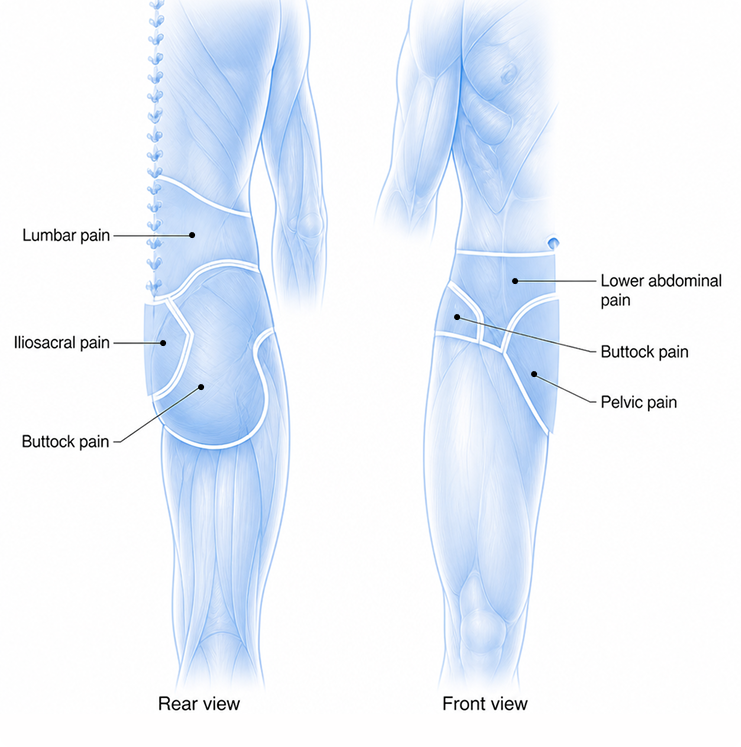
Low back, buttock and pelvic pain is frequently referred from the quadratus lumborum, iliopsoas, gluteus medius, piriformis and the deep pelvic floor muscles. These trigger points can imitate sciatica, sacroiliac joint pain or hip problems, and they often work together, so treating a single muscle is rarely enough.
This Lower Torso page lists 10 symptom patterns and 9 muscles. Start with the symptom that matches where you feel pain: each symptom page shows which muscles are the primary, secondary and tertiary sources. Then open a muscle page to see where its trigger points sit, how to locate them by palpation, common causes and evidence-based self-care.
Referred pain maps describe typical patterns, so use them as a starting point rather than a diagnosis. Trigger points often develop in groups: when one muscle in this region is overloaded, its neighbours usually compensate, which is why the symptom pages list several muscles. If pain is severe, constant, follows an injury or comes with numbness, weakness, fever or night pain, see a clinician before trying self-treatment.