
Symptoms
Mid-Thoracic Back Pain: Trigger Points and Muscles Involved
Region: Upper Back, Shoulder and Arm
Mid-Thoracic Back Pain: trigger points and referred pain. Primary muscles in this reference: Rectus Abdominis, Scalene, Latissimus Dorsi, Iliocostalis Thoracis, Multifidi, Rhomboid, Serratus Posterior Superior, Infraspinatus, Trapezius, Serratus Anterior.
Overview
The primary muscles listed for Mid-Thoracic Back Pain are Rectus Abdominis, Scalene, Latissimus Dorsi, Iliocostalis Thoracis, Multifidi, Rhomboid, Serratus Posterior Superior, Infraspinatus, Trapezius, Serratus Anterior. Trigger points can produce referred pain: discomfort is felt away from the tender muscle. “Muscle knots” is an everyday description, whereas myofascial pain is the clinical term used in the linked references. This is a reference association, not proof that a muscle causes this symptom. A pain map cannot rule out joint, nerve or internal-organ conditions. Match the exact location and circumstances, rather than treating every tender spot as the source.
The primary associations for Mid-Thoracic Back Pain are Rectus Abdominis, Scalene, Latissimus Dorsi, Iliocostalis Thoracis, Multifidi, Rhomboid, Serratus Posterior Superior, Infraspinatus, Trapezius, Serratus Anterior. Primary, secondary and tertiary describe the reference's ordering, not a diagnosis or a measured probability. The following extracts describe each muscle's complete referral pattern; not every area mentioned is necessarily part of your symptom.
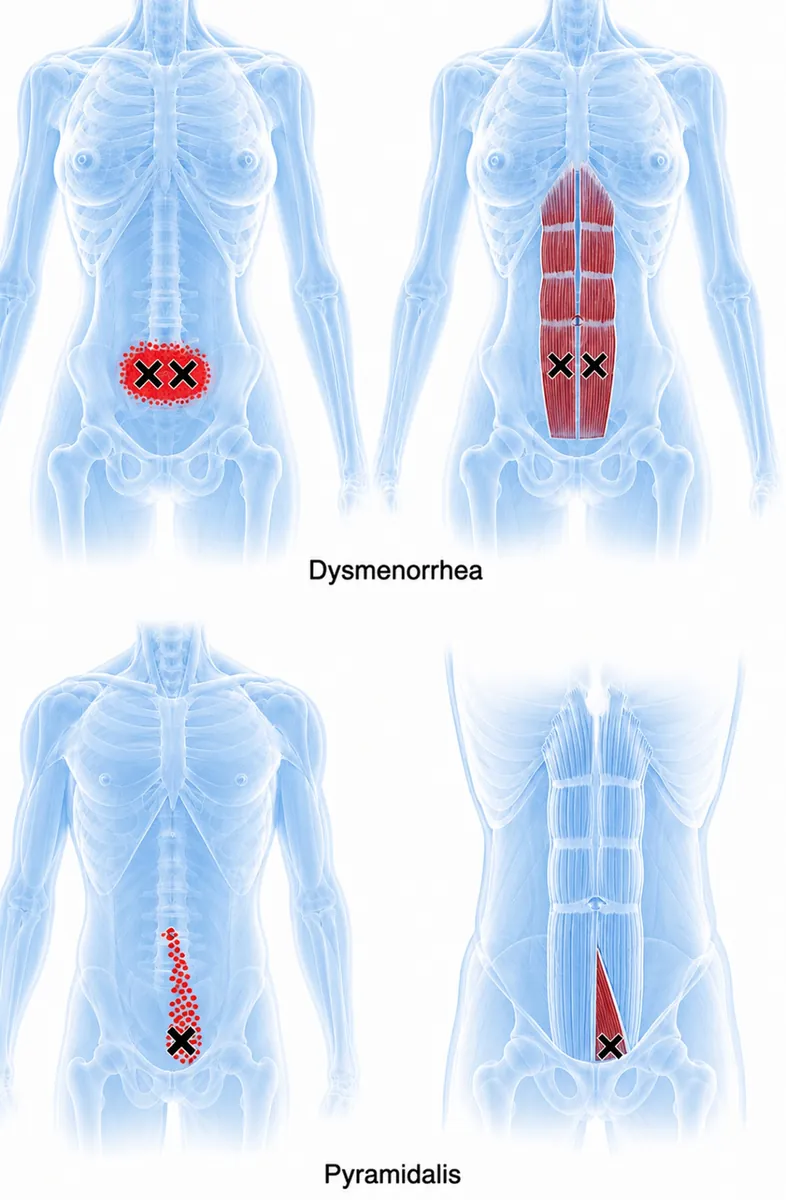
Rectus Abdominis — Mid-back and lower-back pain, urinary urgency-like sensations, abdominal cramps.
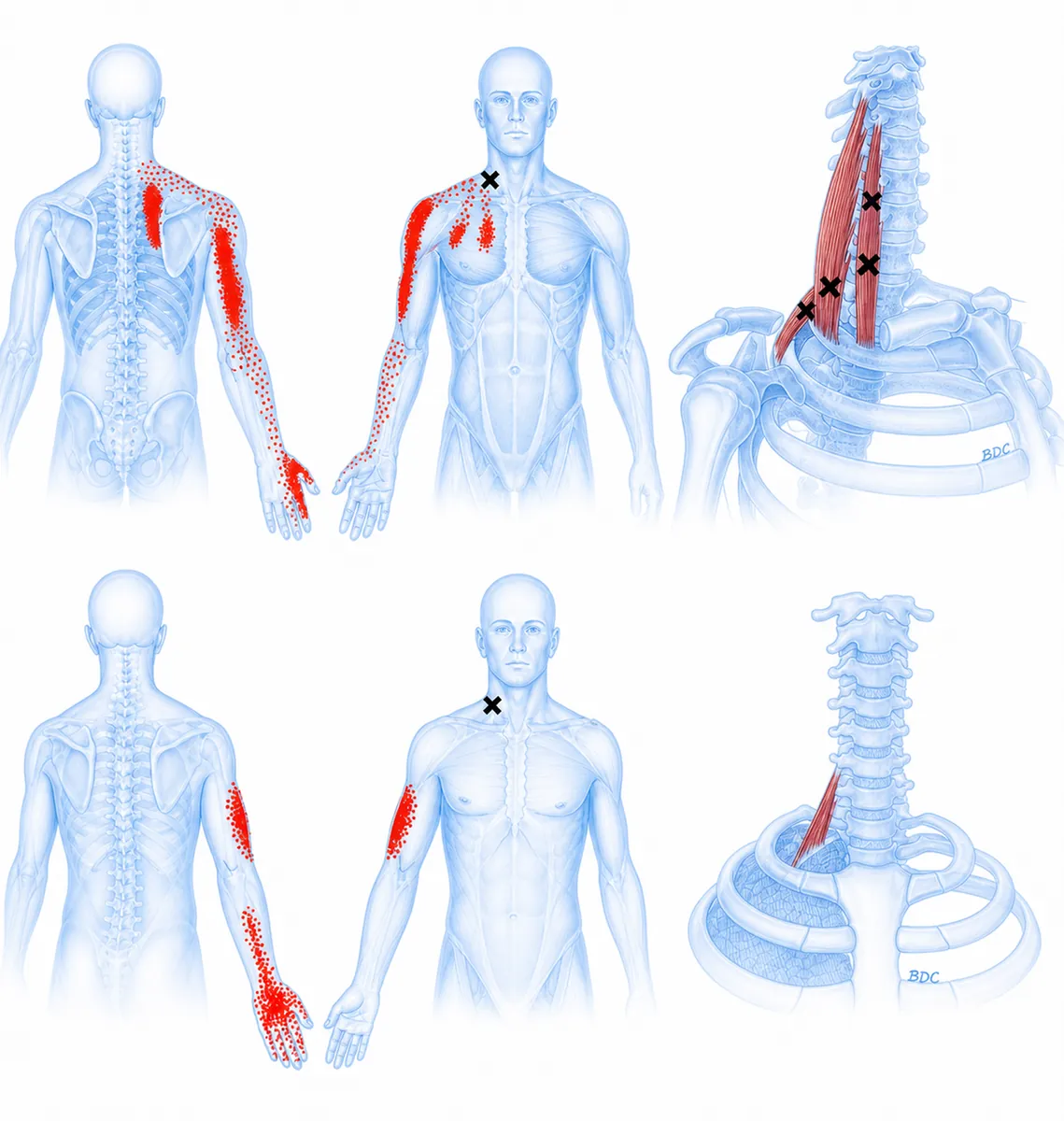
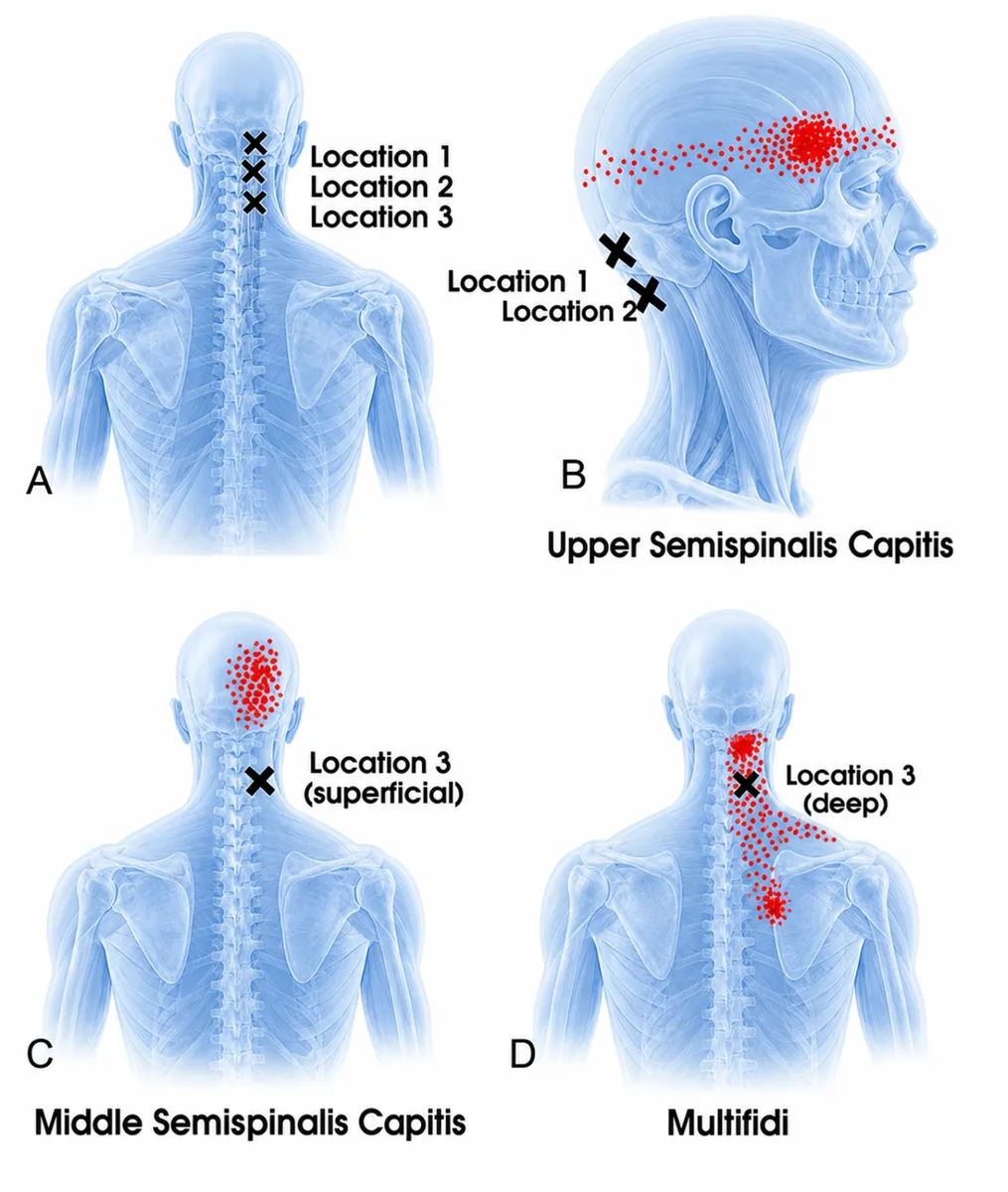
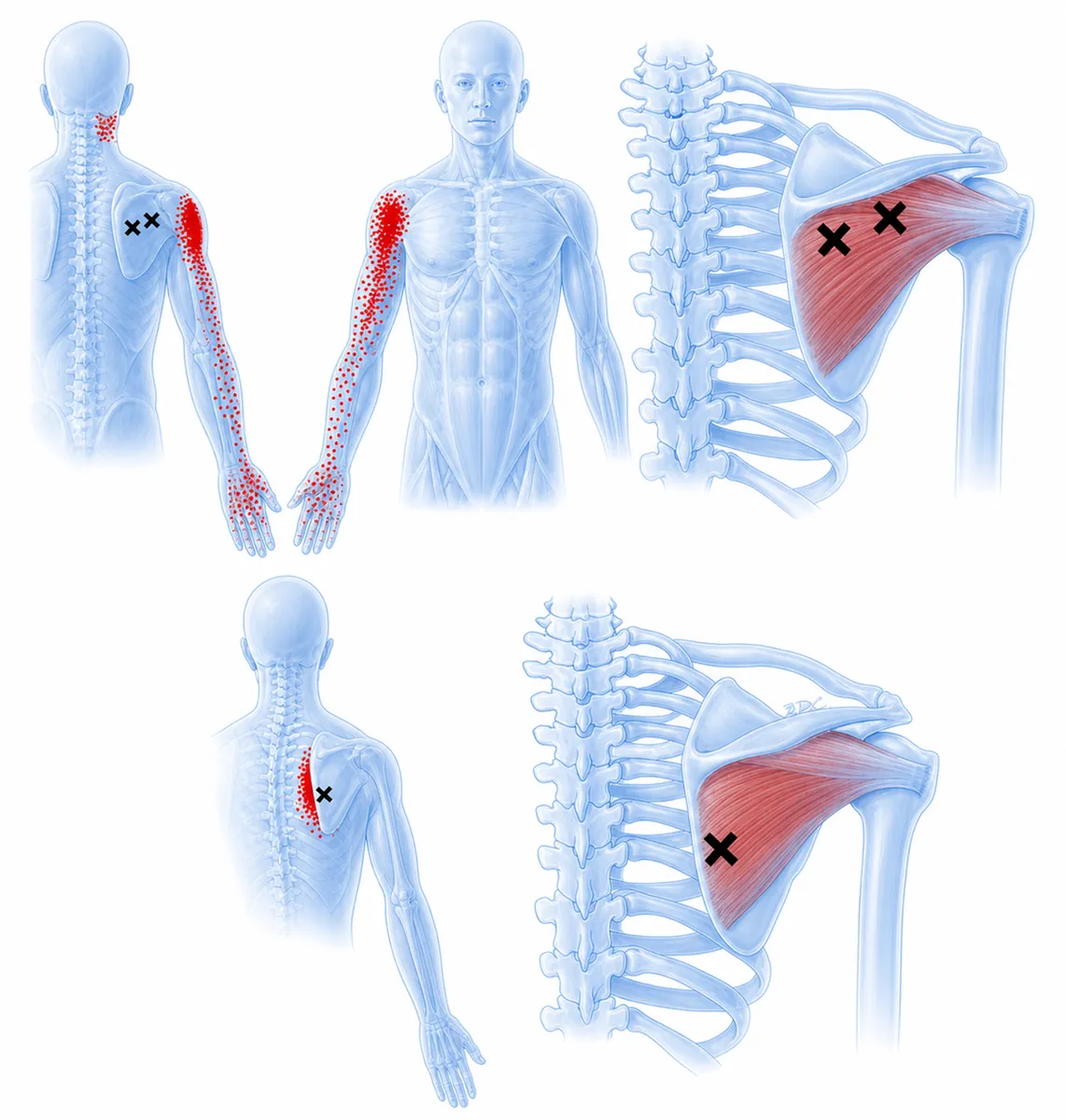
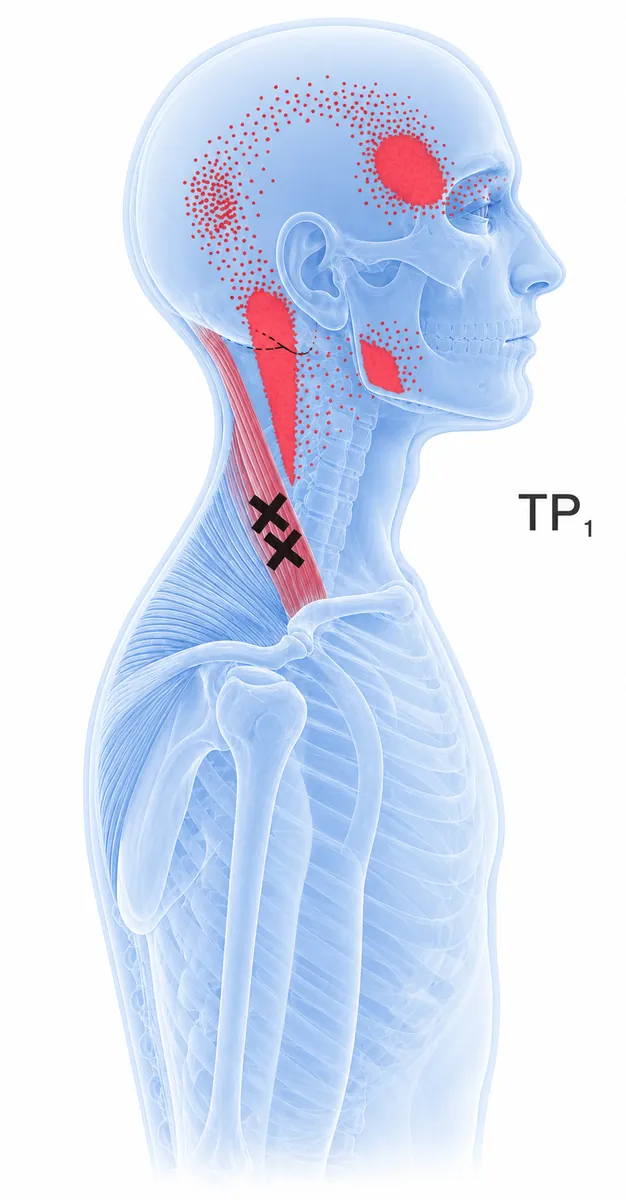
Scalene — Anterior chest, upper back between the scapulae, lateral shoulder, posterior arm and forearm, sometimes into the thumb and index finger.
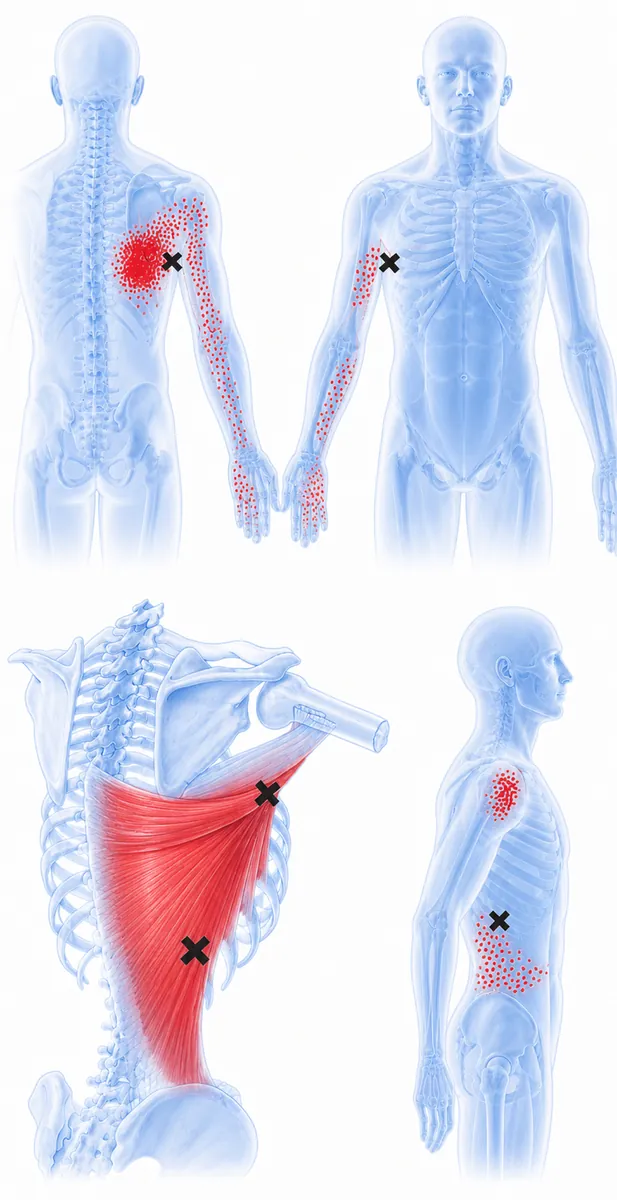
Latissimus Dorsi — Inferior angle of the scapula, mid-back, and down the medial arm to the ulnar fingers.
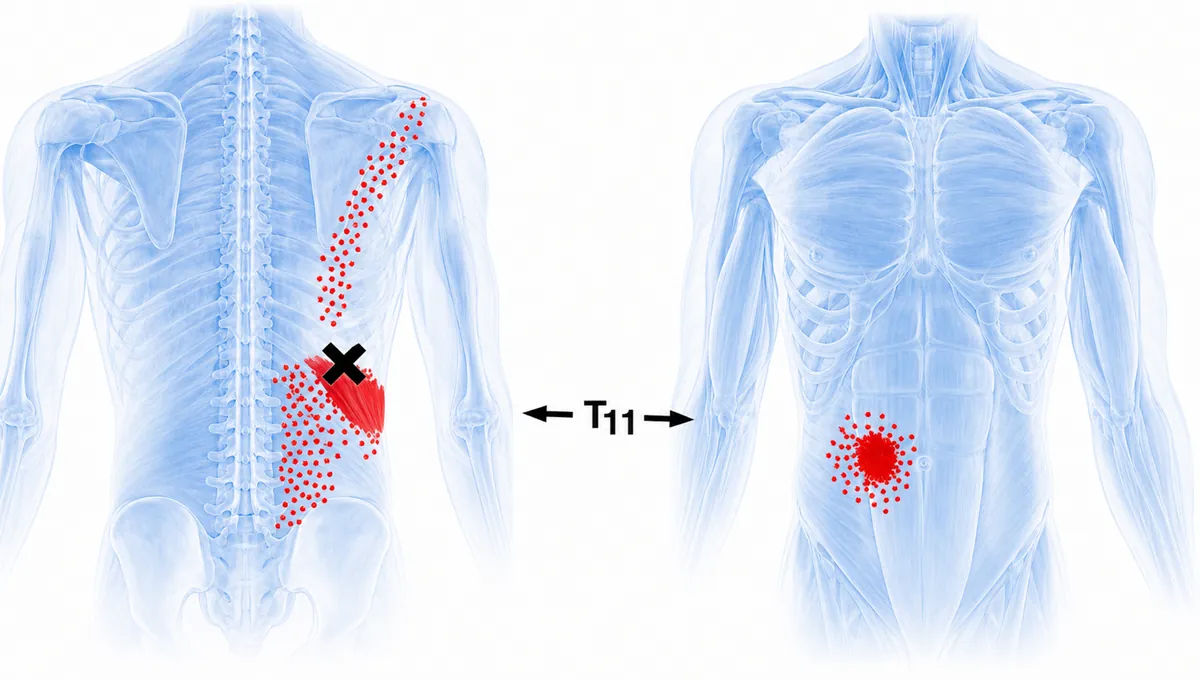
Iliocostalis Thoracis — Upward referral toward the upper back and shoulder blade, downward referral toward the lumbar region, and wrap-around pain over the lateral chest wall.
Multifidi — Local segmental pain, often felt as a 'spot' the patient can point to.
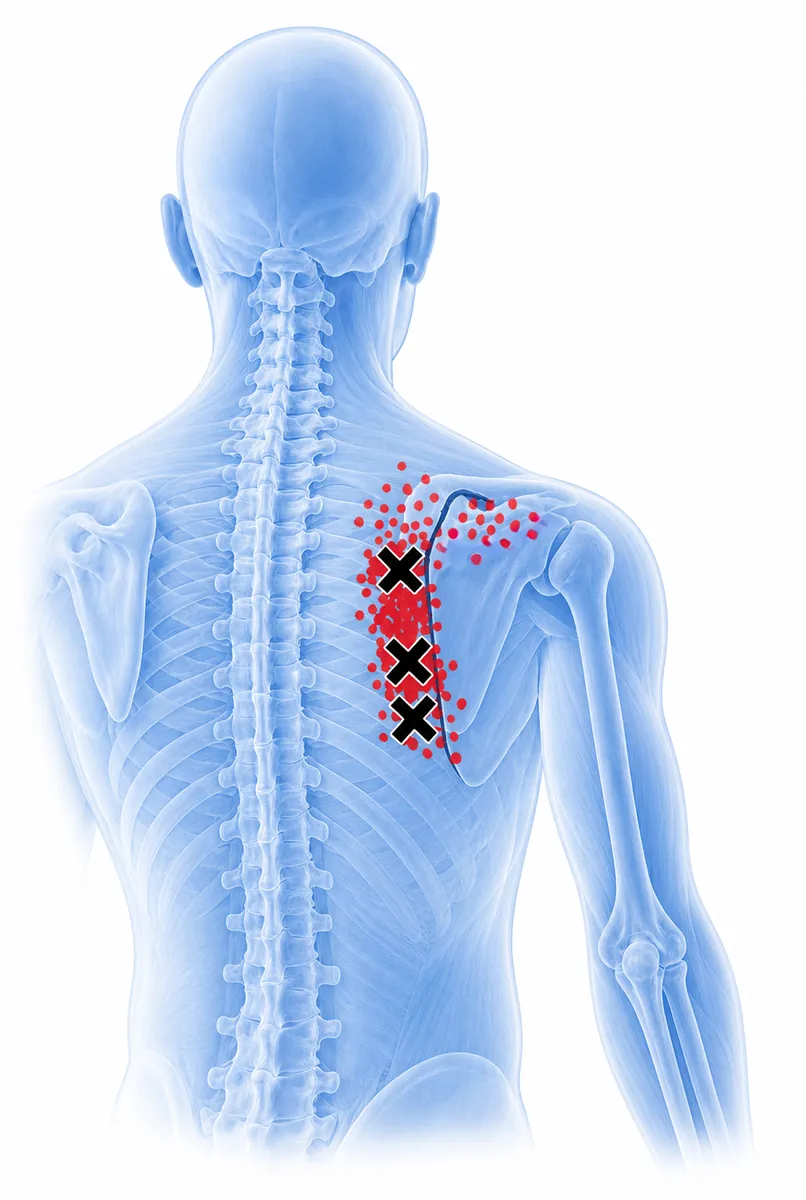
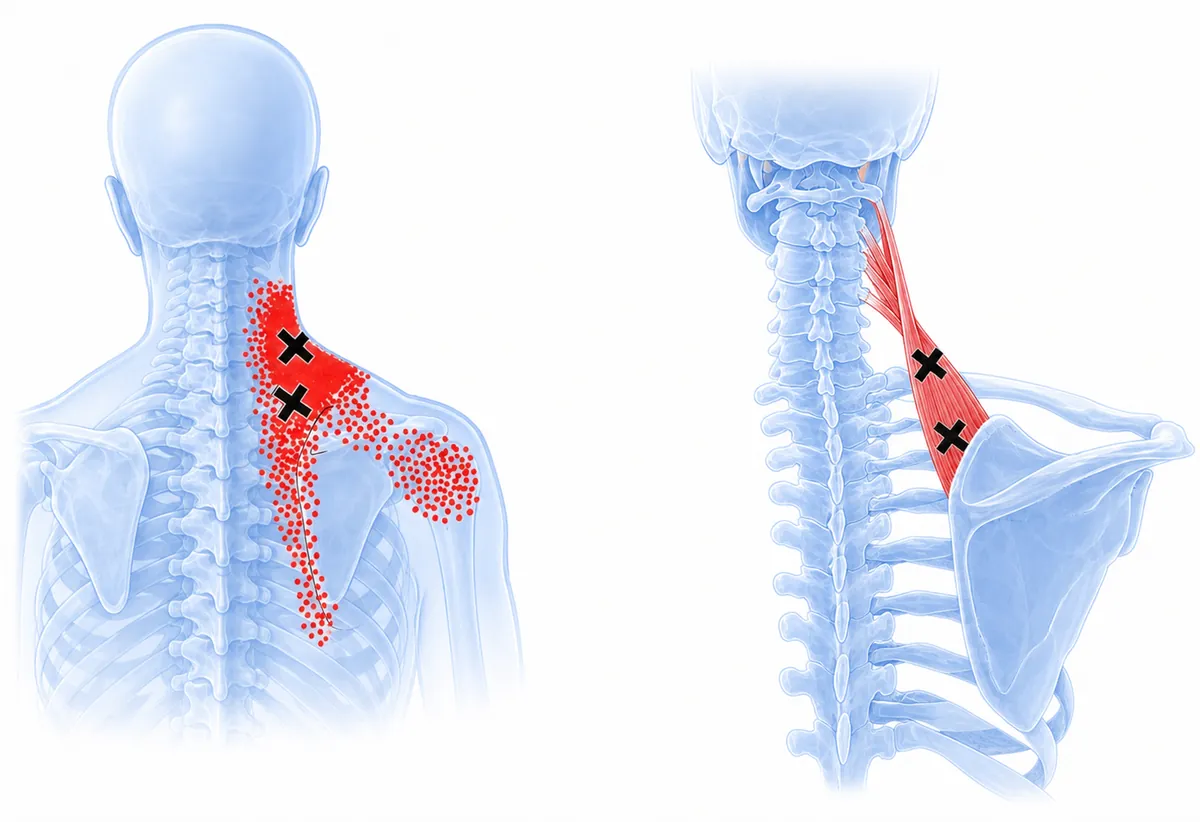
Rhomboid — Superficial ache between the scapulae, often described as 'burning' along the medial border.
Serratus Posterior Superior — Deep ache under the scapula, often mistaken for cervical or rib pain.
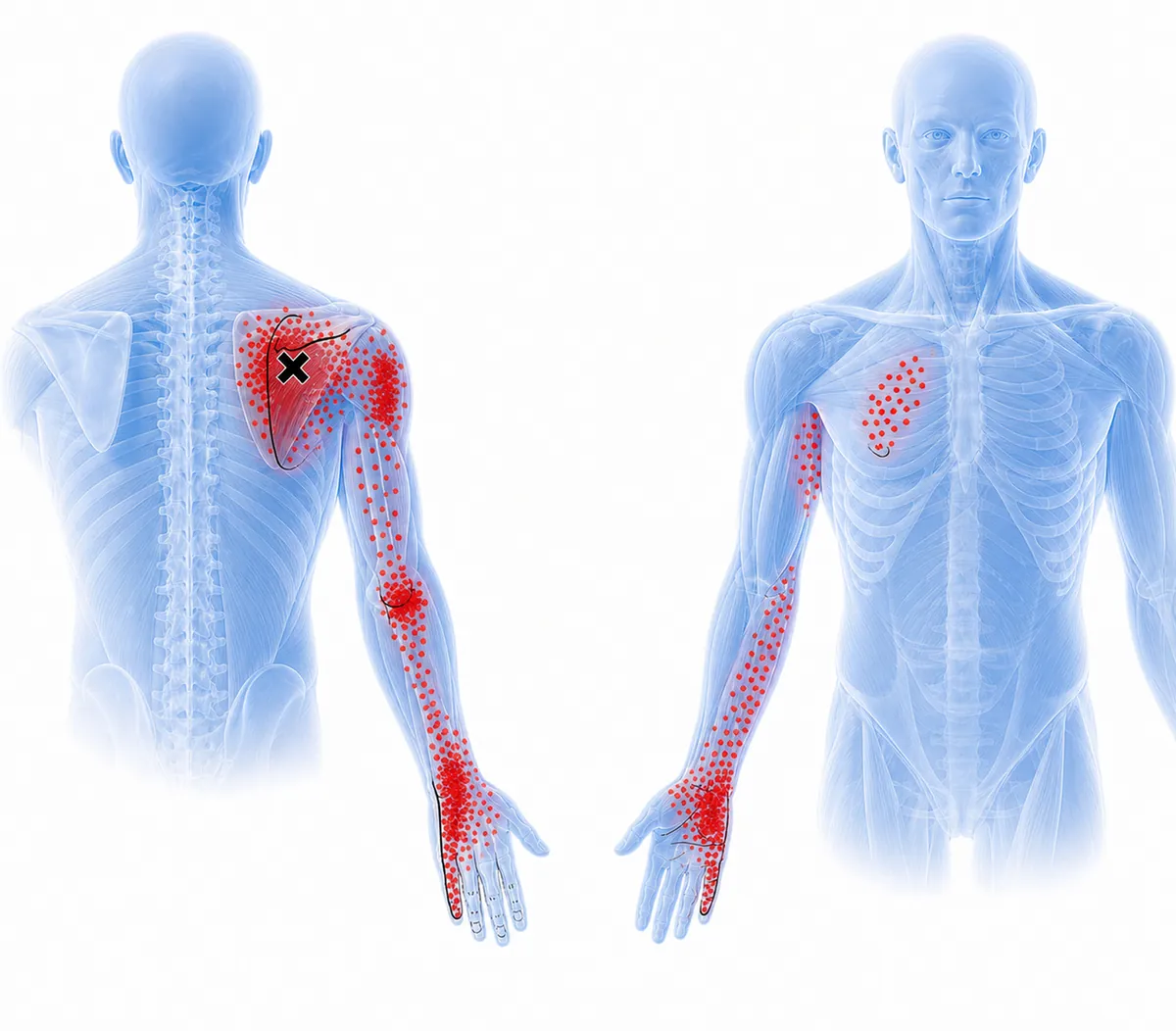
Infraspinatus — Deep anterior shoulder pain (felt 'inside' the joint), spreading down the lateral arm and sometimes into the forearm and radial hand.
Trapezius — Pain refers up the side of the neck to the temple and angle of the jaw, often described as a unilateral tension headache. May also refer to the back of the ear.
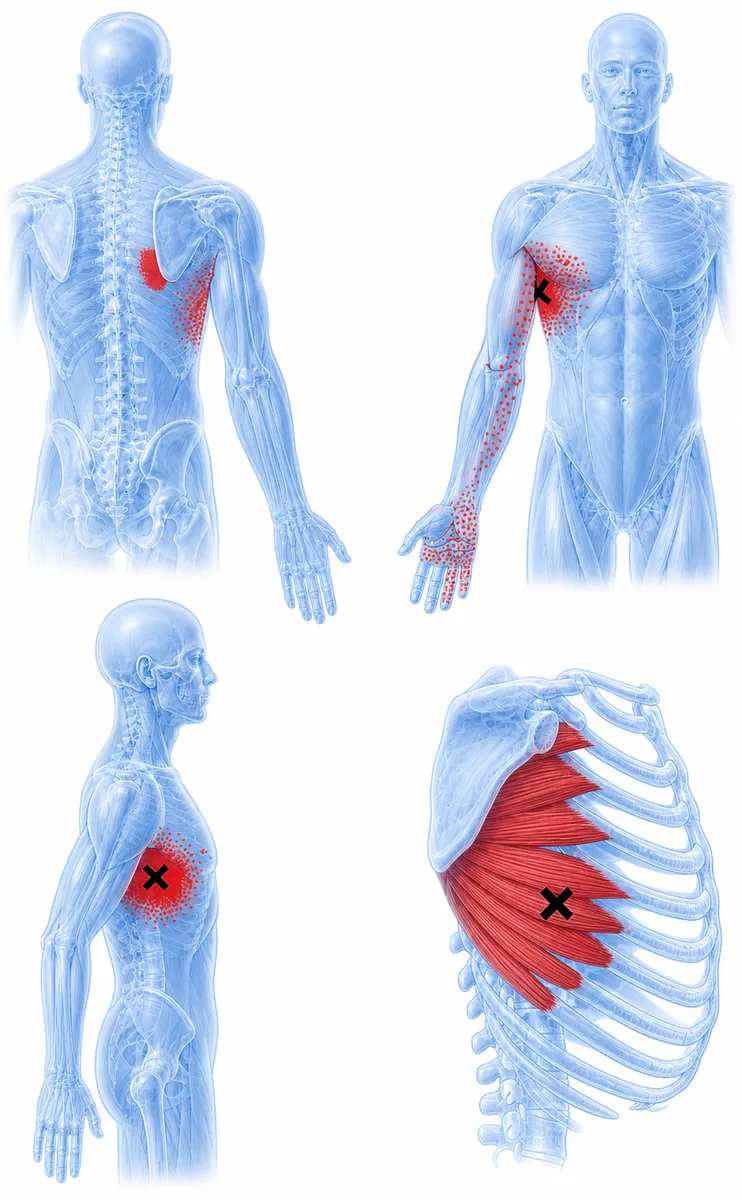
Serratus Anterior — Lateral chest and lower scapular border, sometimes mimicking 'side stitch' or breathing pain.
Record where Mid-Thoracic Back Pain occurs, which position or activity changes it, and whether it is accompanied by numbness, weakness or another symptom. Compare those observations with the linked muscle maps. A clinician can assess whether palpation reproduces the familiar complaint; tenderness alone does not establish the cause. Do not press deeply into the throat, abdomen or other sensitive areas to test a theory.
For Mid-Thoracic Back Pain, begin with assessment of the symptom rather than assuming that release is needed. Where a muscular contribution has been assessed, the linked pages for Rectus Abdominis, Scalene, Latissimus Dorsi, Iliocostalis Thoracis, Multifidi, Rhomboid, Serratus Posterior Superior, Infraspinatus, Trapezius, Serratus Anterior describe their existing self-care options, loading factors and precautions. Read those precautions before trying an exercise. Dry needling and injections are clinician-only procedures. Do not use a referral map to delay care or to stop an established treatment.
Rectus Abdominis — Sit-ups overload, post-surgical scarring, postural collapse. Palpate the muscle belly along its accessible course. Reproduction of the patient's familiar pain on palpation supports involvement. Stretching into extension, breathing retraining. Clinically: manual release and needling.
Scalene — Chronic upper-chest breathing, anxiety, persistent cough, sustained head rotation, carrying heavy loads. Locate the lateral border of the SCM, slide posteriorly. Palpate gently — avoid sustained pressure over neurovascular structures. Diaphragmatic breathing retraining is the highest-yield intervention. Gentle stretching, postural work. Clinically: careful manual release, avoid aggressive needling due to brachial plexus proximity.
Seek medical assessment for Mid-Thoracic Back Pain when it is new, persistent, worsening or unexplained. Muscle associations are educational information, not a way to exclude other causes. The existing warning signs for this entry are: Chest pain, dyspnea, unexplained weight loss, fever — refer.
For an appointment about Mid-Thoracic Back Pain, bring a short record of the symptom rather than only the name of a suspected muscle. Note the activity before it started, whether the location has changed and what has already been tried. These observations help a professional compare the muscular associations with alternative explanations without relying on the atlas alone.
Primary Symptoms
Secondary Symptoms
Related articles
FAQ
- Which muscles are listed for Mid-Thoracic Back Pain?
- Rectus Abdominis, Scalene, Latissimus Dorsi, Iliocostalis Thoracis, Multifidi, Rhomboid, Serratus Posterior Superior, Infraspinatus, Trapezius, Serratus Anterior. This is a reference association, not proof that a muscle causes this symptom. A pain map cannot rule out joint, nerve or internal-organ conditions. Match the exact location and circumstances, rather than treating every tender spot as the source.
- How can I check the pattern of Mid-Thoracic Back Pain?
- Record where Mid-Thoracic Back Pain occurs, which position or activity changes it, and whether it is accompanied by numbness, weakness or another symptom. Compare those observations with the linked muscle maps. A clinician can assess whether palpation reproduces the familiar complaint; tenderness alone does not establish the cause. Do not press deeply into the throat, abdomen or other sensitive areas to test a theory.
- Does Mid-Thoracic Back Pain prove I have trigger points?
- This is a reference association, not proof that a muscle causes this symptom. A pain map cannot rule out joint, nerve or internal-organ conditions. Match the exact location and circumstances, rather than treating every tender spot as the source.
References
- • Travell & Simons, Vol. 1
- • Travell & Simons — Myofascial Pain and Dysfunction
- • triggerpoints.net — reference
- • Travell & Simons — Myofascial Pain and Dysfunction, Vol. 1
- • Dommerholt & Fernández-de-las-Peñas — Trigger Point Dry Needling
Medically reviewed by: Marco Aruffo — physiotherapist since 2006, specialised in myofascial pain · Last reviewed: